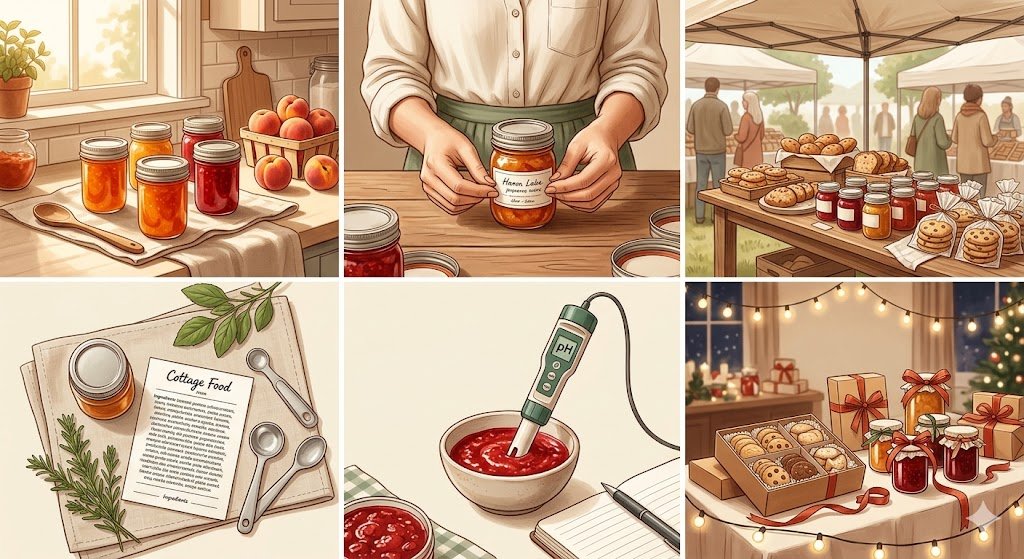
Properly made fruit jams are shelf-stable, high-acid, and permitted in virtually every state.
Why Jams Are Almost Universally Permitted
Jams, jellies, and preserves combine high sugar, high acidity (pH below 4.6), and low water activity. This combination inhibits pathogen growth, making them shelf-stable. They are permitted under cottage food law in virtually all 50 states.
Almost Always Permitted
- Fruit jams — strawberry, peach, blueberry, raspberry, fig, muscadine, apple
- Jellies — grape, apple, crabapple, mint, jalapeño jelly
- Preserves and marmalade — citrus marmalade, chunky fruit preserves
- Fruit butters — apple butter, peach butter, pumpkin butter (shelf-stable versions)
Gray Areas and Not Permitted
- Lemon curd — contains eggs and butter; most states classify as TCS
- Low-acid vegetable spreads — tomato jam without added acid, onion marmalade
- Fresh salsa — requires refrigeration; not cottage food
- Dairy-based spreads — cream cheese blends, dulce de leche
Jalapeño jelly (peppers + apple juice + sugar + vinegar + pectin) is permitted virtually everywhere. The vinegar and sugar drive pH well below 4.6, making it shelf-stable despite the pepper content.
Labeling Jams
Standard cottage food label fields apply plus net weight in oz and grams. Most fruit jams have no major allergens — confirm with each ingredient supplier, as some pectins contain trace ingredients.
Digital pH Meter — Essential for Jams, Hot Sauce & Pickles
If you make jams, jellies, hot sauce, or pickles, a calibrated digital pH meter lets you verify every batch reaches pH below 4.6 for shelf stability. Models with automatic temperature compensation (ATC) are accurate to ±0.01 pH.
Check Price on Amazon →