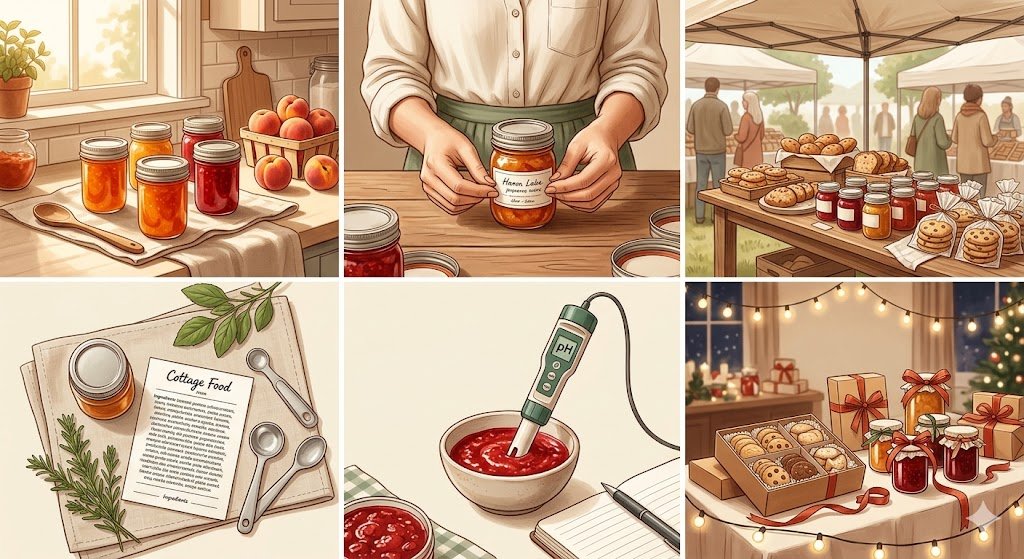
Holiday markets are the highest-revenue selling events of the year for cottage food sellers.
Why Holiday Markets Are Different
Holiday markets — Christmas markets, Thanksgiving markets, winter craft fairs — are categorically different from regular farmers markets. The customers are in gift-buying mode. They are looking for items to give to teachers, neighbors, coworkers, family members, and hosts. They are actively looking to spend money on something that feels special and handcrafted.
For cottage food sellers, this context completely changes the dynamics. A $12 jar of jam that feels like a purchase decision at a regular market becomes an obvious hostess gift at a holiday fair. A $25 cookie tin becomes a stocking stuffer. The same products — with the right packaging — command higher prices and sell faster.
Apply Early
The most popular holiday markets open applications 3-6 months in advance — sometimes earlier. If you plan to participate in a specific holiday market, research the application window now and apply as soon as it opens. Indoor markets with fixed booth counts fill up fast. Being late to apply is the most common reason new vendors miss their target market.
Gift Packaging Strategy
Invest in holiday packaging for the season. The return is significant:
- Gift boxes — tuck cookies, fudge, or multiple jam jars into a kraft gift box with tissue paper and a ribbon. A $12 of individual cookies becomes a $20 cookie gift box.
- Labeled gift bags — clear cellophane bags with a custom holiday tag communicate gift-readiness instantly
- Curated sets — "Jam Trio" (three 4-oz jars in a box), "Baker's Collection" (three bread mixes in a gift bag). Bundles increase average transaction value significantly.
- Seasonal labels — a label that reads "Holiday Spice Granola" or "Winter Berry Jam" outperforms a generic label even on the identical product
Booth Setup for Holiday Markets
- Use height — tiered shelving, wooden crates, risers. Holiday market shoppers browse standing; a flat table loses attention.
- Warm lighting — a battery-powered LED strand or warm-white light strip transforms the mood of a booth at an indoor evening market
- Signage with gift framing — "Makes a perfect teacher gift" or "Pairs well with a bottle of wine" — suggest use cases that make buying decisions easier
- Business cards or small flyers with your market schedule for the spring — holiday customers become regular-season customers if you follow up
Production Planning for the Holiday Rush
Most experienced cottage food sellers produce 3-5x their normal volume in November-December. This requires advance planning:
- Order ingredients and packaging at least 6 weeks before your first holiday market
- Test new holiday recipes by October — do not experiment at the market itself
- Build inventory progressively through October so you are not baking around the clock the week of the event
- Know your state's annual sales cap and monitor your YTD total — holiday season is when sellers accidentally exceed it
Holiday markets can generate 30-40% of annual revenue in 6 weeks. Use the Sales Cap Calculator in October to project whether your holiday season will push you over your state's annual limit. Plan accordingly.